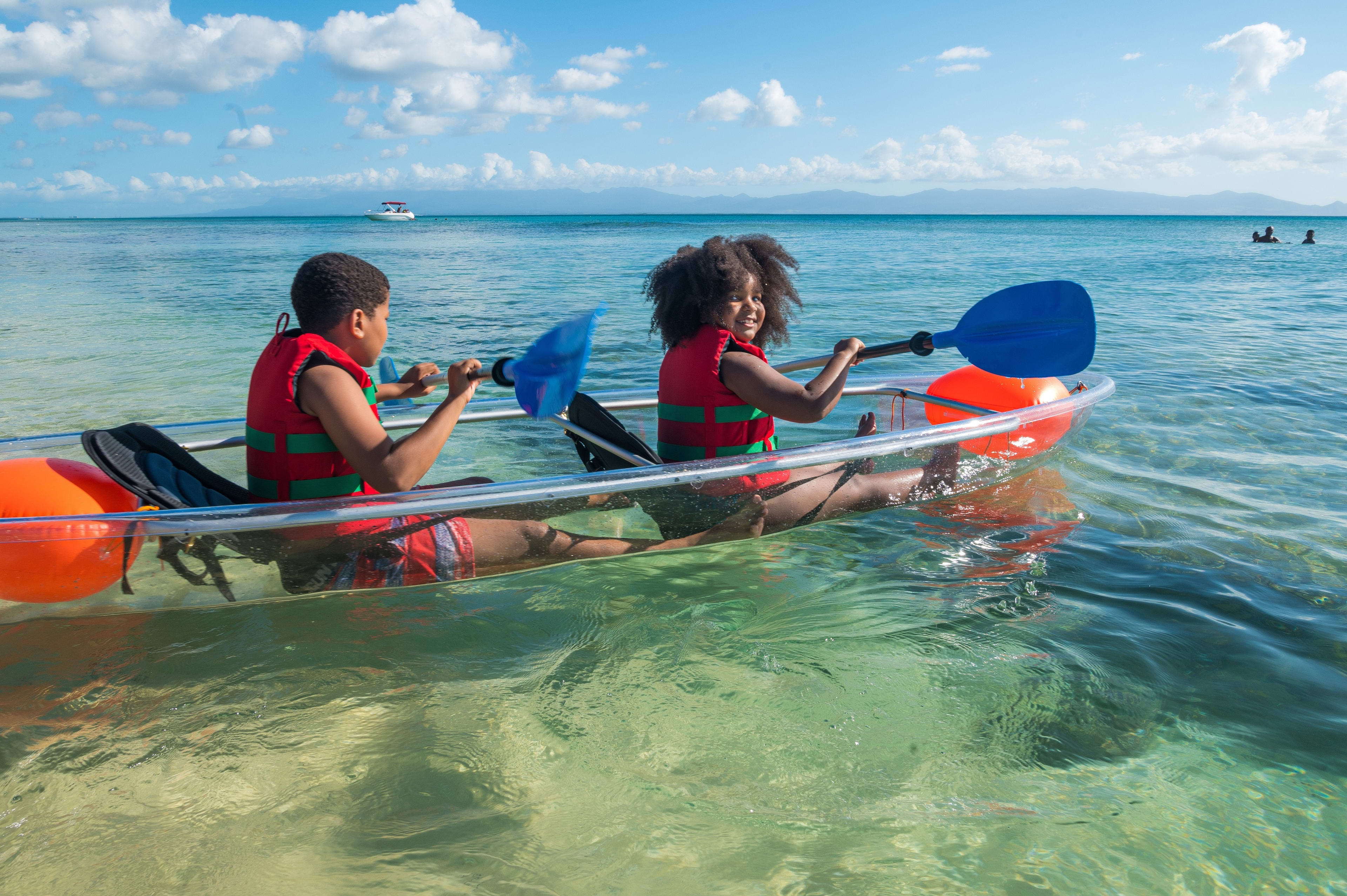
10 great outdoor activities with kids in Guadeloupe
Discover 10 exciting outdoor activities for kids in Guadeloupe, from snorkelling to paragliding. Perfect for family adventures, these experiences combine fun, safety and unforgettab
Welcome to Manawa, the website for booking outdoor activities around the world. From diving to canyoning, we connect adventure enthusiasts with professional local instructors to guarantee unforgettable experiences.
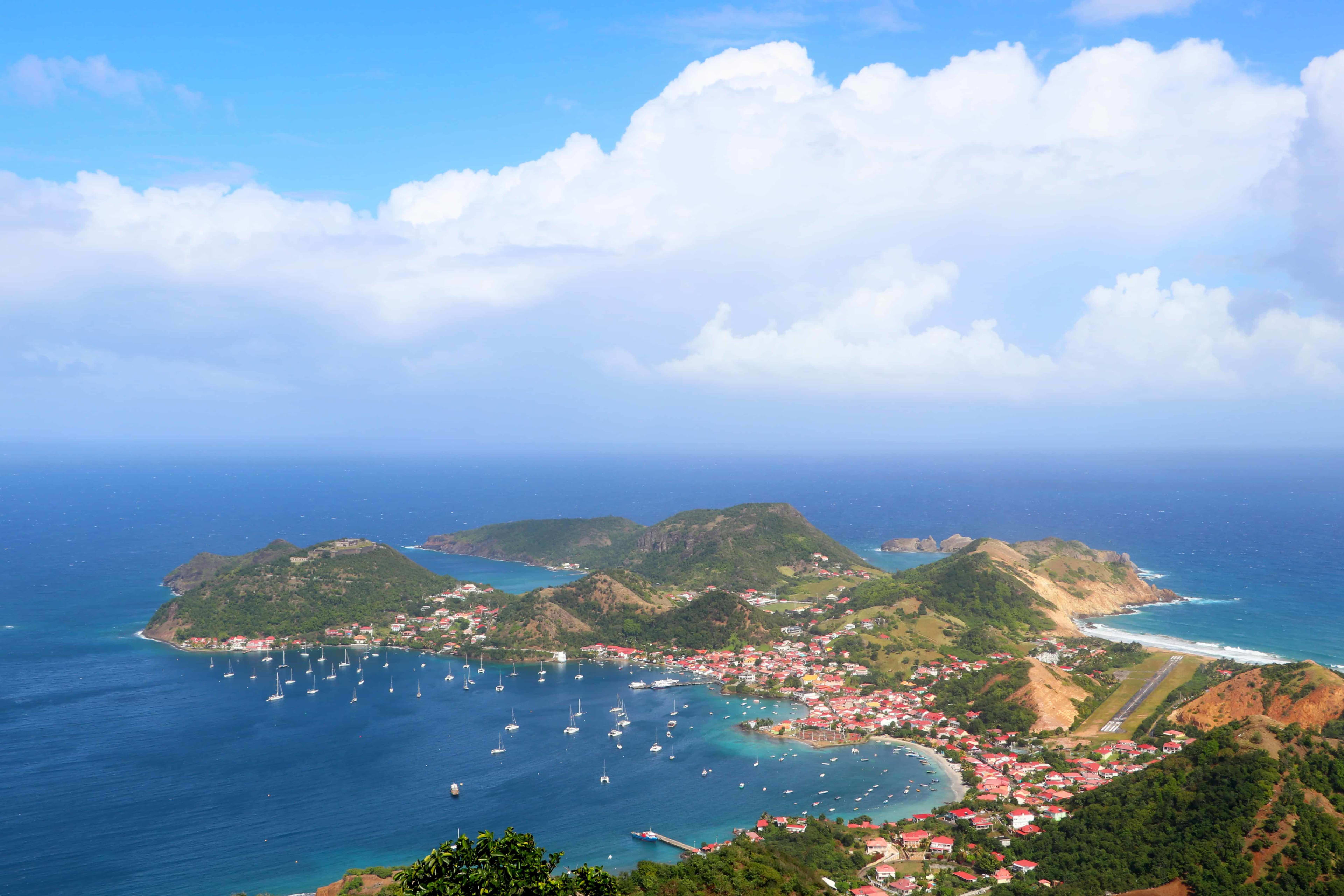
Part of the volcanic arc of the Lesser Antilles archipelago, Guadeloupe is a dream destination in the heart of the Caribbean Windward Islands. We invite you to discover the island's magnificent nature through the many activities available in Guadeloupe. Located between Montserrat to the north and Dominica to the south, the shape of its two main islands, Grande-Terre and Basse-Terre, separated by an arm of the sea, is reminiscent of the wings of a butterfly.
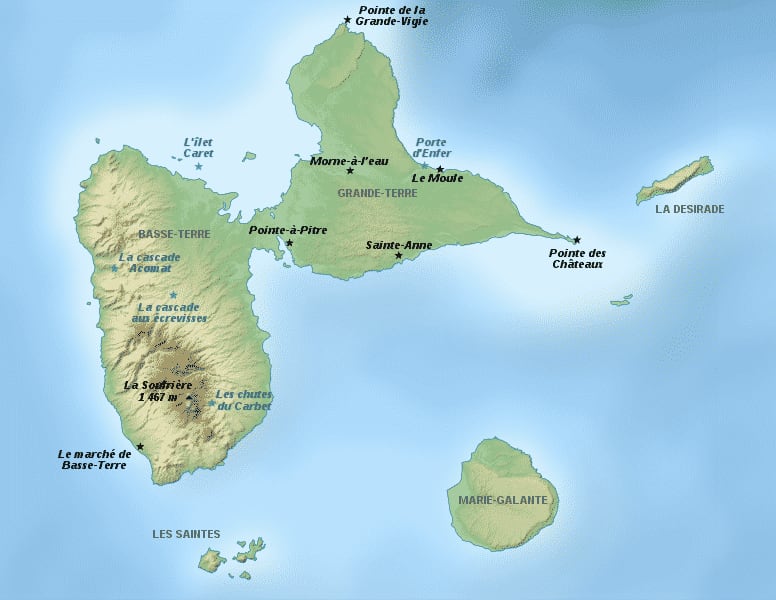
Guadeloupe is an archipelago made up of 7 islands: Grande-Terre and Basse-Terre, the largest, La Désirade, Petite-Terre, Marie-Galante, as well as Terre-de-Haut and Terre-de-Bas in the small archipelago of Les Saintes. So there's plenty to see, and plenty to do, in Guadeloupe! With the lush mountains of Basse-Terre, the plains of Grande-Terre and the lagoons around each of the islands, this archipelago, also known as the Island of Beautiful Waters to the Caribbean Indians, is sure to enchant you in more ways than one!
Grande-Terre, located on the Atlantic Ocean, is also known as the "windward coast". Its coastline runs from its northern tip at Anse-Bertrand to the south-east at Pointe des Châteaux, and has been forged by the powerful swell on this side of Guadeloupe. So it's not here that you'll be able to enjoy a swim in calm turquoise waters, but you will have the opportunity to see some magnificent coastal landscapes, wild and ideal for other activities!
With a stretch of coastline sheltered from the swell of the Atlantic Ocean, Anse-Bertrand gives you the chance to see different landscapes of Guadeloupe: there's nothing better than starting a holiday in Guadeloupe by visiting its wild north coast on foot! On the west side, where the sea is less rough, you can swim on the white sandy beaches of Anse Colas, Anse Laborde and Anse-Bertrand, although be careful of the currents. To the east, nature offers splendid views of breathtaking landscapes that are not to be missed in Guadeloupe! Between the famous Baie de la Porte d'Enfer, the Trou de Madame Coco, the Trou du Souffleur, the Pointe du Piton and, in the far north, the Pointe de la Grande Vigie, you'll be able to feast your eyes on cliffs forged by the biting waves of the Atlantic Ocean!
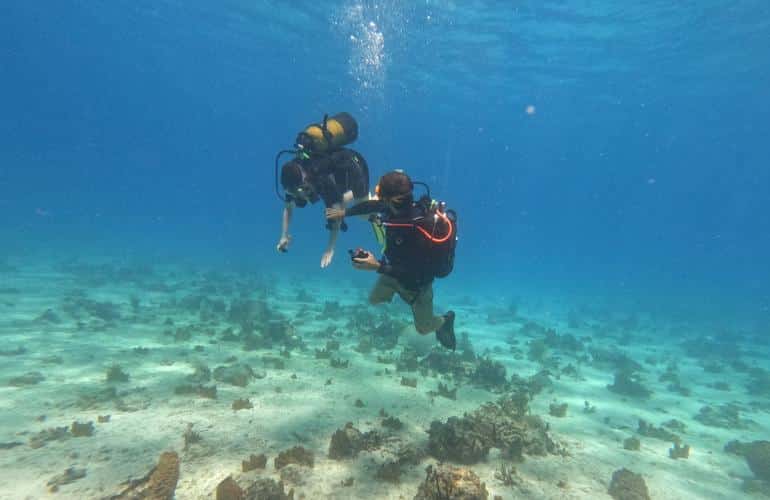
Facing the north of Basse-Terre, Port-Louis has slightly quieter beaches than Anse-Bertrand, including the beautiful Antigues and Souffleur beaches. The Port-Louis seabed is rich in flora and fauna, which you can also discover by scuba diving.
And for those who'd like to get in on the action with something a little more sporty, you can take a jet ski from Port-Louis to visit the Grand Cul-de-sac marin nature reserve at top speed, or take a buggy or quad bike ride inland to explore the sugar cane fields from Petit-Canal to Le Moule.
The commune of Le Moule is also a favourite spot for surfers in Guadeloupe, with its coast offering several spots for surfers of all levels. But it's also here that you can take a cultural break by visiting the Maison Coloniale de Zévallos, which tells the story of sugar cane in Guadeloupe.
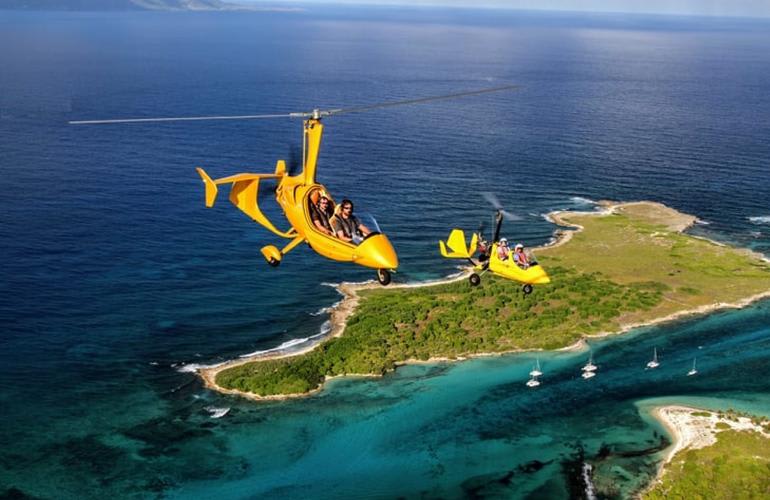
A real landmark on Grande-Terre, Pointe des Châteaux is one of the must-sees on Guadeloupe. Whether on foot or by mountain bike, take the time to discover this place where it's highly recommended to enjoy the sunrise with a view over the island of La Désirade. During your walk around Pointe des Châteaux, you'll have the pleasure of swimming on its beaches, including the Grande Anse des Salines, as well as seeing a few curiosities such as La Douche, a spot that, as you'll see, lives up to its name. This will be a good time to rest before heading to Saint-François airport, the starting point not only for panoramic microlight tours over Guadeloupe, but also for parachute jumps: what could be better than a first flight over a Caribbean island?
Flatter and drier than its neighbour Basse-Terre, the island of Grande-Terre is renowned for the white sandy beaches along its southern coast. From Sainte-Anne to Pointe-à-Pitre, heading west to the Grand Cul-de-sac marin nature reserve, this part of Guadeloupe has plenty of activities to make your stay unforgettable!
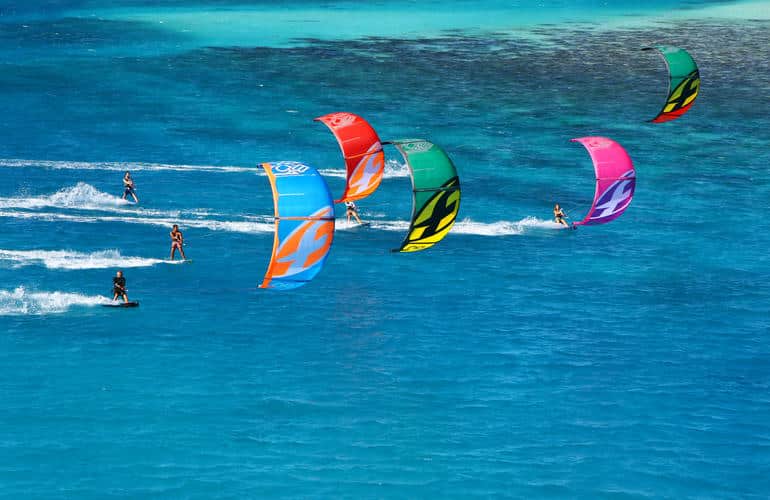
The south coast of Grande-Terre is famous for its white sandy beaches on the edge of a turquoise lagoon, where swimming is a real pleasure. Sainte-Anne is also a good place to take kitesurfing lessons, with the beautiful beaches of Bois Jolan, La Caravelle, La Datcha and many others worth a visit, as well as the islet of Gosier, all visible from the sea. Being by the sea is also an opportunity to take a stroll and sample local dishes in front of incredible scenery in a relaxing atmosphere, typical of Guadeloupe: Guadeloupean cuisine and its multiple origins (Caribbean, European, African and Indian) will amaze you with its atypical flavours! On the menu: local fish and seafood (lambi, snapper, balaou, etc.) combined with vegetables from the archipelago (manioc, okra, sweet potato, etc.), with a made in Guadeloupe sorbet flavoured with local fruits (pineapple, mango, coconut, etc.) for dessert! After all, discovering Guadeloupe's rich culinary heritage is just as much a part of what you can do on the island as the sporting activities!
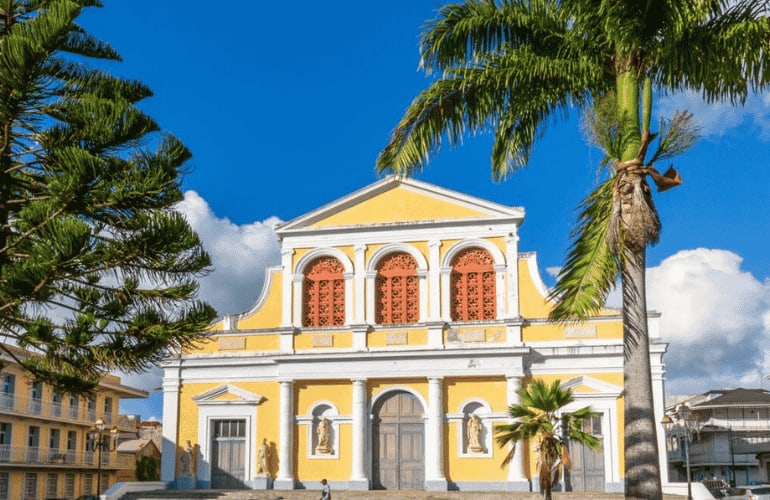
Pointe-à-Pitre, the economic capital of Guadeloupe, is also a town worth discovering for the historical monuments it contains. A visit to Place de la Victoire is a must, as is a visit to the nearby churches of Saint-Pierre and Saint-Paul. You can also visit the Fleur d'épée Fort in Gosier. Another thing to do in Pointe-à-Pitre is to wander between the aisles of the Saint-Antoine and La Darse markets, where you can find souvenirs to bring back from your trip to Guadeloupe, as well as enjoying the local atmosphere and the scent of spices, including colombo, a blend of chilli, saffron, coriander, cumin and garlic. You'll also have the chance to try some Guadeloupean street food: poulet boucané (smoked chicken), bokit (a kind of fried doughnut with a filling) or agoulou (a sandwich with a filling), as you walk along the banks of the Rivière Salée separating the islands of Grande-Terre and Basse-Terre.
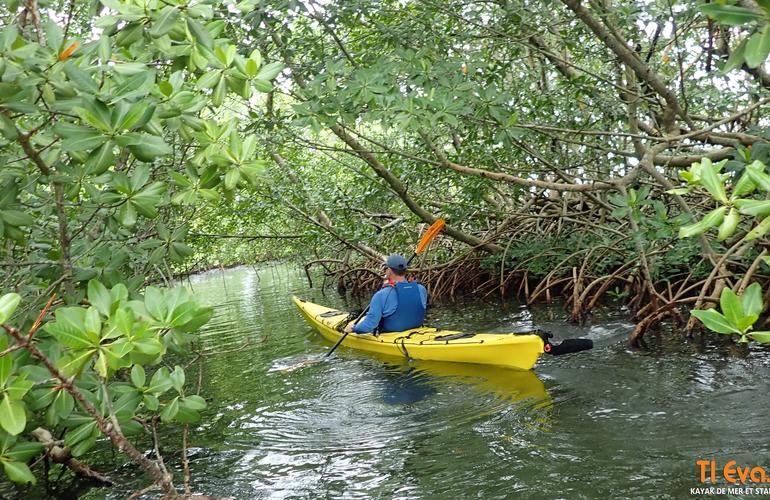
A vast bay stretching from Sainte-Rose in Basse-Terre to Morne-à-l'Eau in Grande-Terre, the Grand Cul-de-sac marin nature reserve is enclosed by a coral reef and islets, the largest of which is the mangrove-covered islet of Fajou. The Grand Cul-de-sac marin can be visited by jet ski from Baie-Mahault, or, for greater peace and quiet, by canoe kayak or stand-up paddle from Morne-à-l'Eau, a commune famous in Guadeloupe for its cemetery with its black and white chequered mausoleums. Among the activities on offer in Guadeloupe, water-sports fans will be delighted by a session of water-skiing and wakeboarding in the bay, and the more curious will be enchanted by the underwater diversity visible by snorkelling from the beaches along this unique nature reserve. Although it lacks relief, Grande-Terre is an unmissable island in Guadeloupe, not only because of its beaches, which have made its reputation, but also because of the superb scenery along its coasts, as well as the sporting and cultural activities that will give you plenty to do during your stay!
Unlike its neighbour Grande-Terre, Basse-Terre is a mountainous island with a lush tropical forest. This is the leeward coast, dominated by the Soufrière volcano. Between waterfalls, mountains and coastline, the island of Basse-Terre also has plenty to offer in the heart of its national park, created in 1989!
Facing the Grand Cul-de-sac marin nature reserve, Sainte-Rose is a great place to go by stand-up paddle or sailboat to some of the islets that line the bay, including îlet Blanc and îlet La Biche, where you can enjoy lunch with your feet in the sand, right on the open sea. Alternatively, you can simply relax on the Amandiers or Mambia beaches, far from the hustle and bustle of the beaches in the south of Grande-Terre, and take a short stroll to Pointe Allègre. Liqueur lovers will be delighted to visit the Musée du Rhum in Sainte-Rose, in the heart of the Reimonenq Distillery, one of 9 distilleries in Guadeloupe. Finally, for those who'd like to have something else to do and get out and about a bit more, you can opt for a horseback ride through the countryside north of Basse-Terre, a fine foretaste of what awaits you further south!
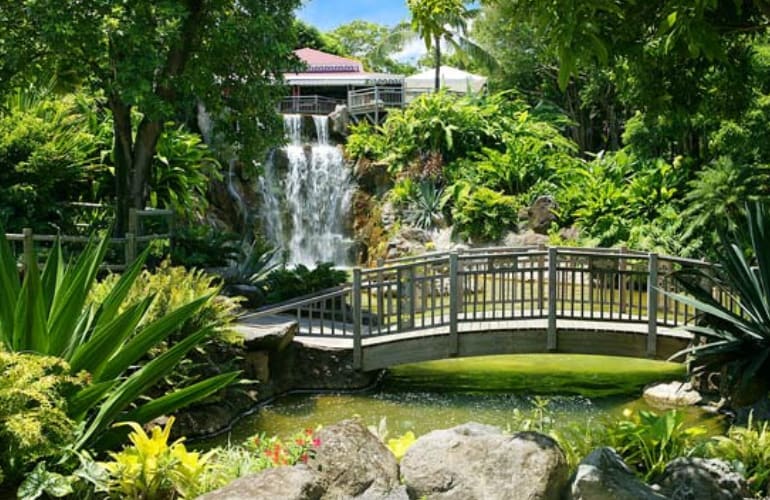
Basse-Terre has a number of waterfalls that can be admired on hikes, but you can also swim in them if they have a pool. On the northern side of the Guadeloupe National Park, you can see the Saut des Trois Cornes waterfall inland between Sainte-Rose and Deshaies, as well as hot springs. Deshaies is also home to the Jardin Botanique de Deshaies, once owned by Coluche, where you can admire the local flora, as well as pink flamingos, hummingbirds and blue macaws. The beaches of Grande Anse and La Perle will give you the chance to take a break on their golden sands before continuing your journey through southern Guadeloupe towards Pointe-Noire, passing by another waterfall, Saut d'Acomat.

Stop off at the Maison du Cacao for a tasting before setting off on a boat trip in the Caribbean Sea, where you can meet dolphins, sperm whales and even whales in season! Below Pointe-Noire, the Cousteau Reserve and the îlets Pigeon in the commune of Bouillante offer other water sports activities, including canoeing and kayaking, and diving for sea turtles. You can also relax on the beautiful black sandy beach of Malendure before taking the route de la traversée, also known as the route des Mamelles because it passes between the two peaks of Les Mamelles, which rise to 584 m. On the way to Petit-Bourg, stop off at the Ecrevisses waterfall, the Saut de la Lézarde, and many other amazing places hidden away in the Guadeloupe National Park!
This side of Basse-Terre is home to the highest point in Guadeloupe and the Lesser Antilles at 1,467 m, the Soufrière volcano. Also known as the "old lady", it last erupted in 1976. It is an integral part of the Parc national de la Guadeloupe, a place full of things to do in Guadeloupe, and more specifically in Basse-Terre!
Also recognised by UNESCO as a biosphere reserve in 1992, the Guadeloupe National Park extends as far as Grande-Terre. But the heart of the park is to be found to the south of Basse-Terre, where a number of hiking trails have been laid out to enable as many people as possible to explore the park. So a visit to Guadeloupe is a must! As well as its lush vegetation, this protected area boasts some beautiful waterfalls not to be missed, including the Moreau Falls. You can set off on a sporty hike from the commune of Goyave, where you can also go horse-riding.
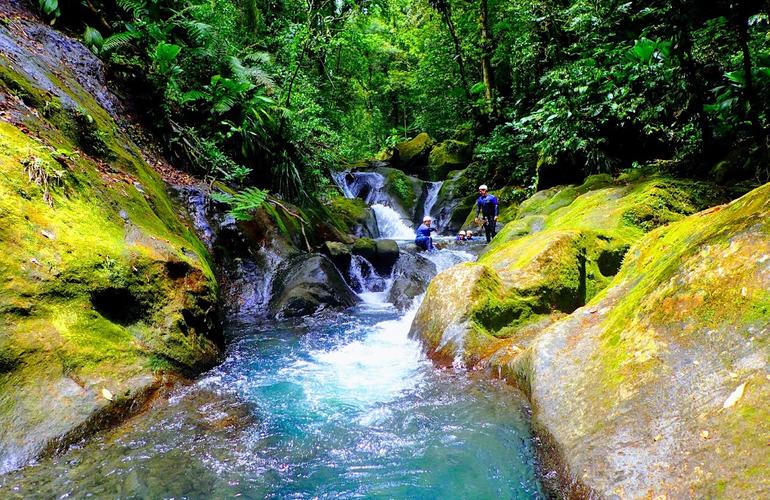
The Soufrière volcano and its incredible surroundings are the perfect setting for an activity that can only be enjoyed in this part of Guadeloupe: canyoning. Set off from Saint-Claude, at the foot of the volcano, for the Ravine Chaude canyon and get your adrenalin pumping! You can also go hiking to see the famous Carbet waterfalls, the highest of which is 110 m high, the Grande chute du Galion, or Lac Flammarion, a crater lake on the southern flank of the Soufrière volcano. And if you feel like relaxing after all these sporting activities, head to the commune of Basse-Terre for a break on the black sand of Rivière-Sens beach, or for a visit to Fort Delgrès or the Bologne distillery for a Guadeloupean cultural break.
Trois-Rivières is the starting point for your trip to the southern islands of Guadeloupe, in the Saintes archipelago. Fortunately, there are plenty of things to do in this commune, so you can make the most of your last moments in Basse-Terre! If you haven't seen enough waterfalls for your taste, check out the La Parabole and La Coulisse waterfalls, which are also great for swimming. If you prefer to relax by the sea, the black sandy beaches of Bananier or Grande Anse are perfect. And if you prefer to spend your time sightseeing, visit the Roches Gravées archaeological park, or head up to the commune of Capesterre-Belle-Eau for a stroll along the coconut-lined Dumanoir avenue, then visit the Plantation Grand Café or the Maison de la Kassaverie, where the local cassava cake, kassav, is produced.
It's impossible to think of leaving Guadeloupe without exploring its other islands! La Désirade, Petite-Terre, Marie-Galante and the islands of the Saintes archipelago are all worth a day's visit! So set sail from the port of Trois-Rivières to begin your tour of these islands, which will make the perfect end to your stay in Guadeloupe.
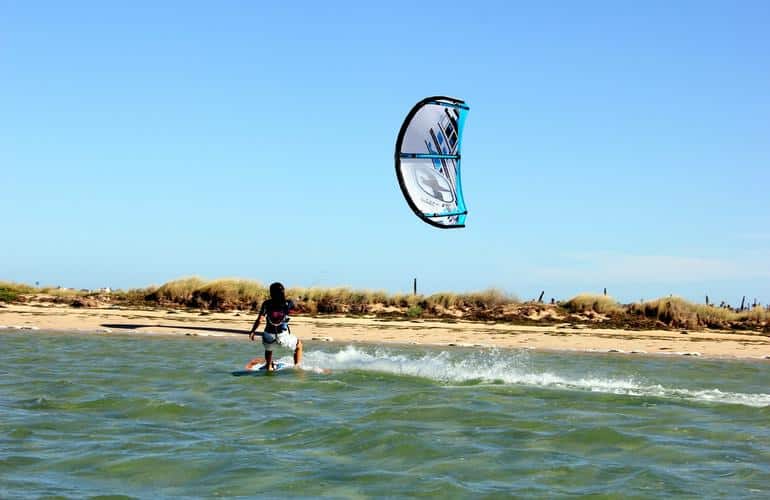
Of the 9 islands in the Saintes archipelago, only Terre-de-Haut and Terre-de-Bas are inhabited. They are the two largest, and Terre-de-Haut is the most visited: it features Fort Napoléon, a must-see in Guadeloupe if you're passing through, as well as the Chameau viewpoint, the highest in the Saintes archipelago, offering a superb view of the surrounding area. There are a number of beaches where you can go swimming, including Pompierre beach, Anse du Pain de Sucre for snorkelling, and Anse Rodrigue where you may come across iguanas. Sports enthusiasts will be delighted to be able to hike on the Cabrit islet to the north of Terre-de-Haut, or take a kitesurfing course in Terre-de-Bas!
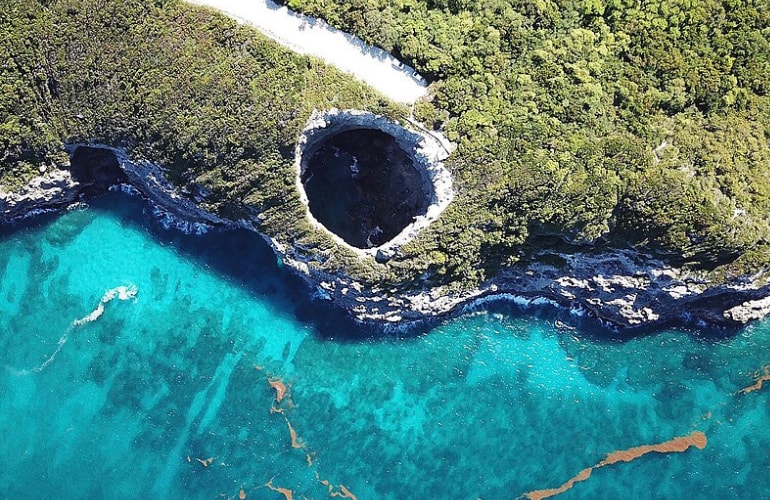
Nicknamed the "big cake" because of its shape and flat terrain, Marie-Galante is well worth a visit. A land of sugar cane fields, it is here that you can visit the remains of the Habitation Murât, Guadeloupe's former largest distillery, as well as attend ox pulling competitions, a real tradition in Guadeloupe where there are clubs dedicated to the sport. Marie-Galante is also renowned for its white sandy beaches, including Anse Canot, Anse de Mays, Vieux Fort, Feuillère and Moustique. Don't hesitate to take a walk along the island's footpaths, particularly to discover fabulous landscapes such as the Gueule Grand Gouffre or the Trois Frères viewpoint, which you won't see anywhere else in Guadeloupe!
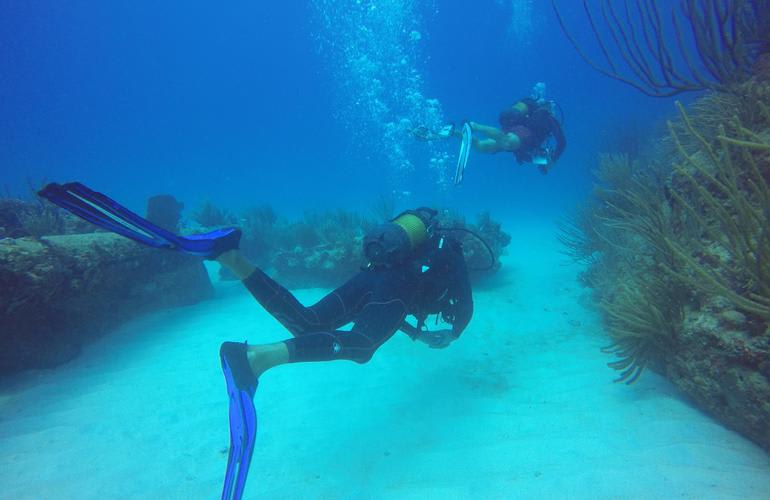
From Saint-François in Grande-Terre, you can take a day trip to La Désirade or the islands of Petite-Terre by boat. La Désirade is 11km long, so scooters, 4×4s and mountain bikes are available for hire from the moment you arrive at Beauséjour. The island is a nature reserve teeming with iguanas, which you can meet on a hike along the Chemin de la montagne trail. Nature being what tourists come to La Désirade for on a trip to Guadeloupe, don't hesitate to explore the Jardin Botanique du Désert, or even try your hand at scuba diving on this wild island! And for those who want to spend the day in complete tranquillity, don't hesitate to opt for a catamaran trip around the islands of Petite-Terre. You'll be delighted to see the lagoon and the heavenly beaches of Terre-de-Haut and Terre-de-Bas, the two islands of Petite-Terre to which access is regulated.
As on many islands, there's plenty to see and do in Guadeloupe! Grande-Terre will appeal to lovers of water sports, with magnificent beaches to the south and a nature reserve in the Grand Cul-de-sac marin, while Basse-Terre will win over fans of canyoning and hiking in the rainforest. Adrenalin-seekers won't be disappointed either, with jet skiing, wakeboarding and parachute jumping all available!
Get your swimming costume and hiking boots ready: Guadeloupe has plenty to offer between the sea and the mountains, between the Caribbean Sea and the Atlantic Ocean! It's up to you to discover and choose from all our activities in Guadeloupe.
P.S: If you get the chance, visit the other islands of the Lesser Antilles where other sporting activities await you, particularly Martinique!
Passionate about outdoor activities, I'll be sharing my tips and tricks to help you discover a destination or sport in the best possible way!
Discover 10 exciting outdoor activities for kids in Guadeloupe, from snorkelling to paragliding. Perfect for family adventures, these experiences combine fun, safety and unforgettab
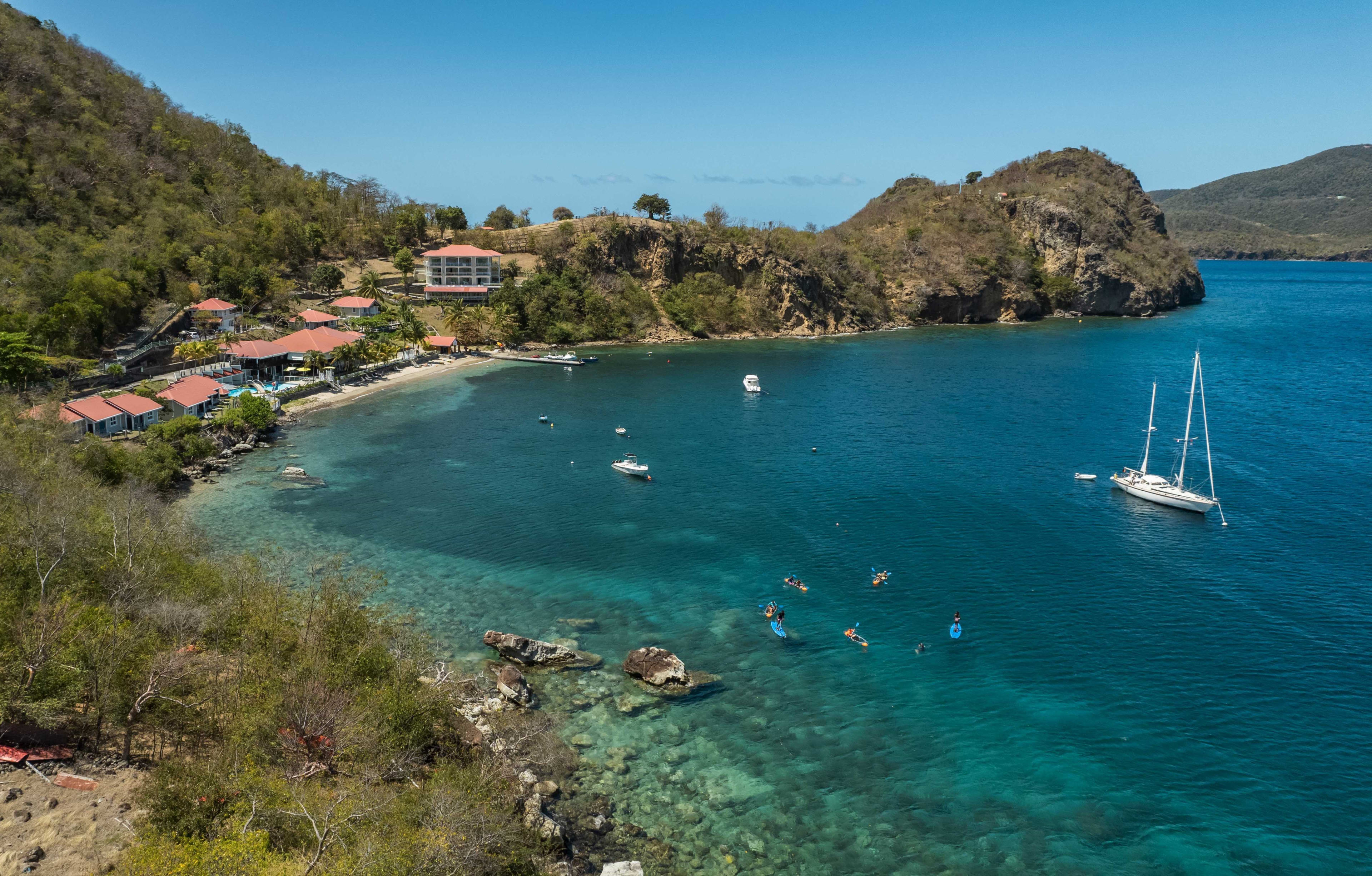
As well as lounging and swimming, discover 7 activities to do in the Saintes archipelago in Guadeloupe for an unforgettable stay!
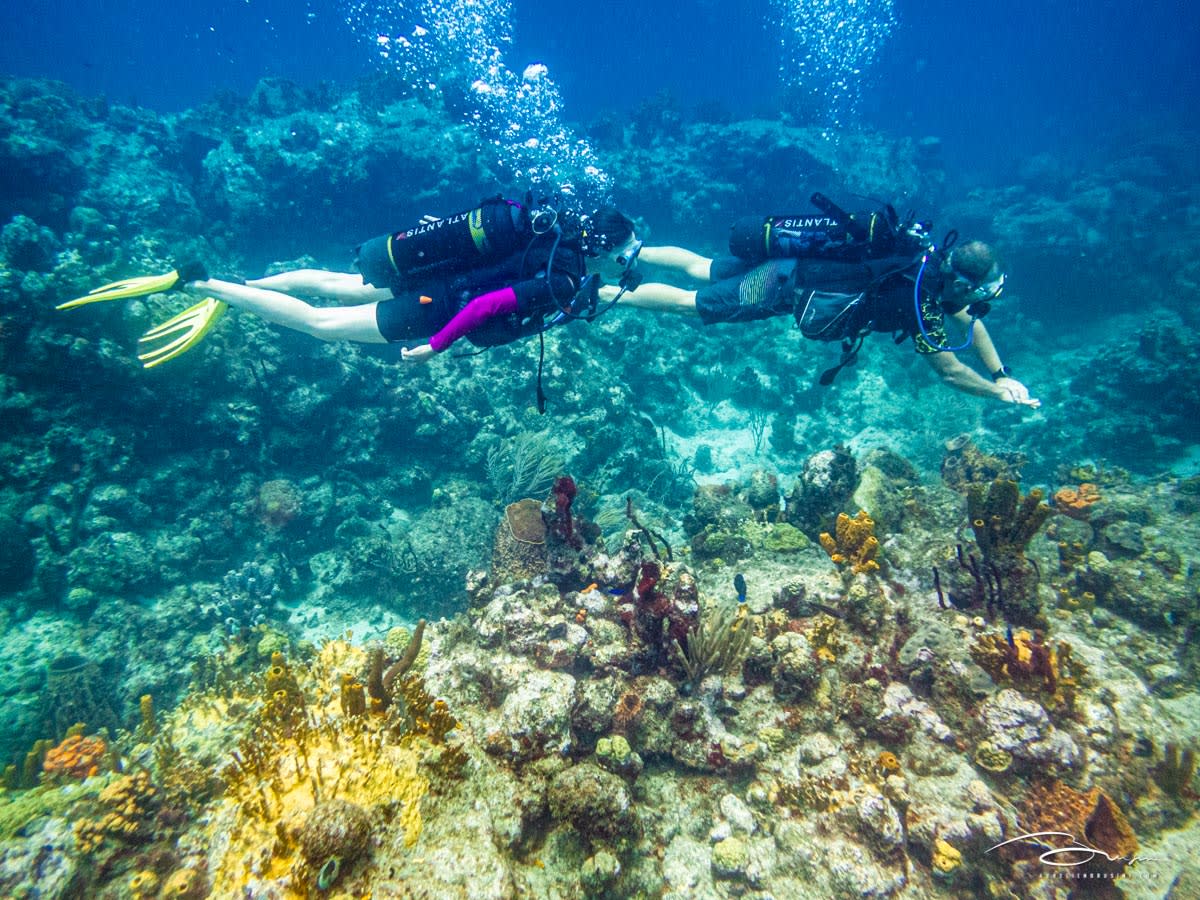
Home to large marine reserves and various underwater biotopes rich in flora and fauna, Guadeloupe offers a host of incredible diving spots!
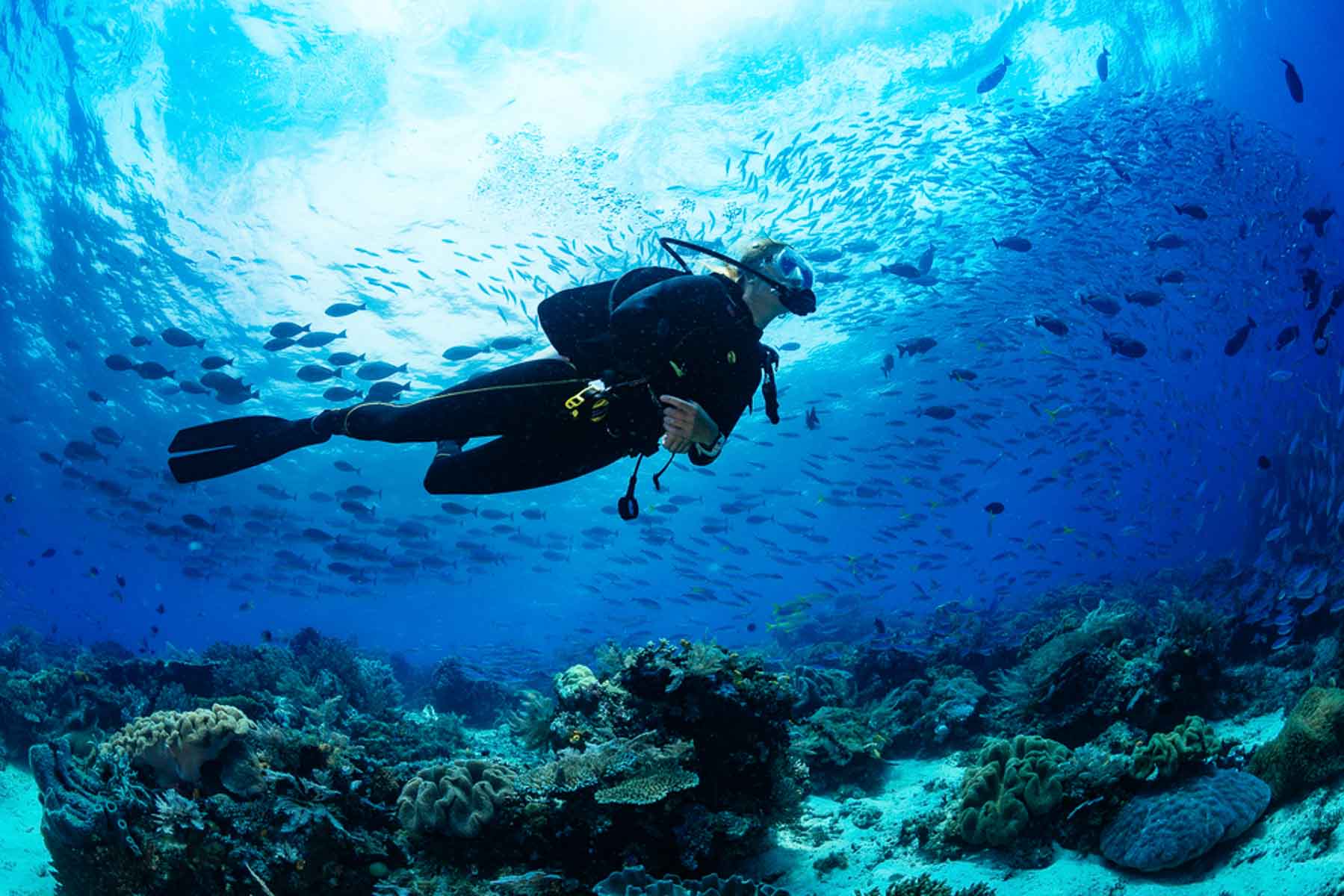
A must-see site in Guadeloupe, the Réserve Cousteau offers a wide range of activities to discover its incredible protected underwater world!
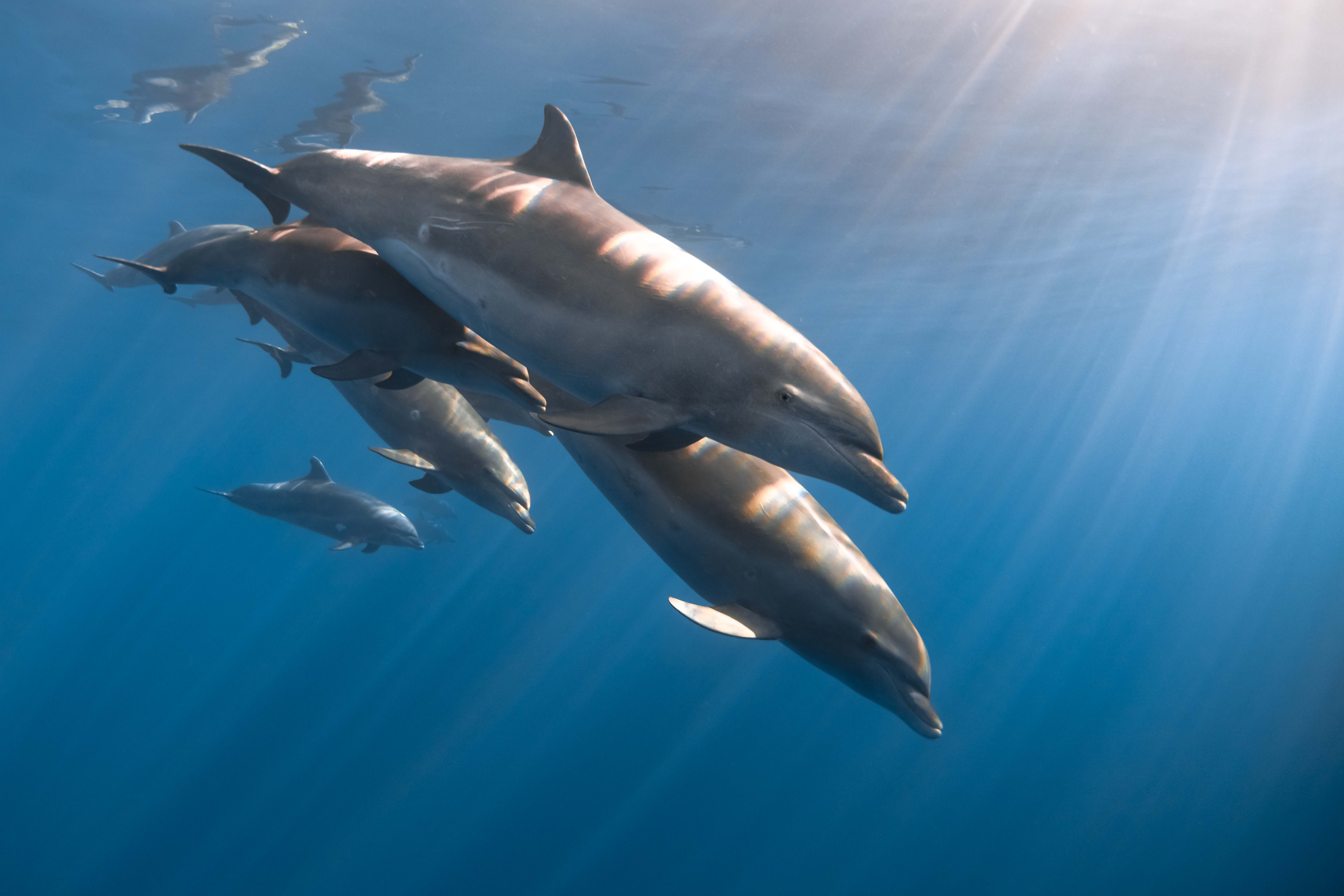
Have you always dreamt of swimming with dolphins in their natural habitat? Find out where you can make your dream come true on the French islands!
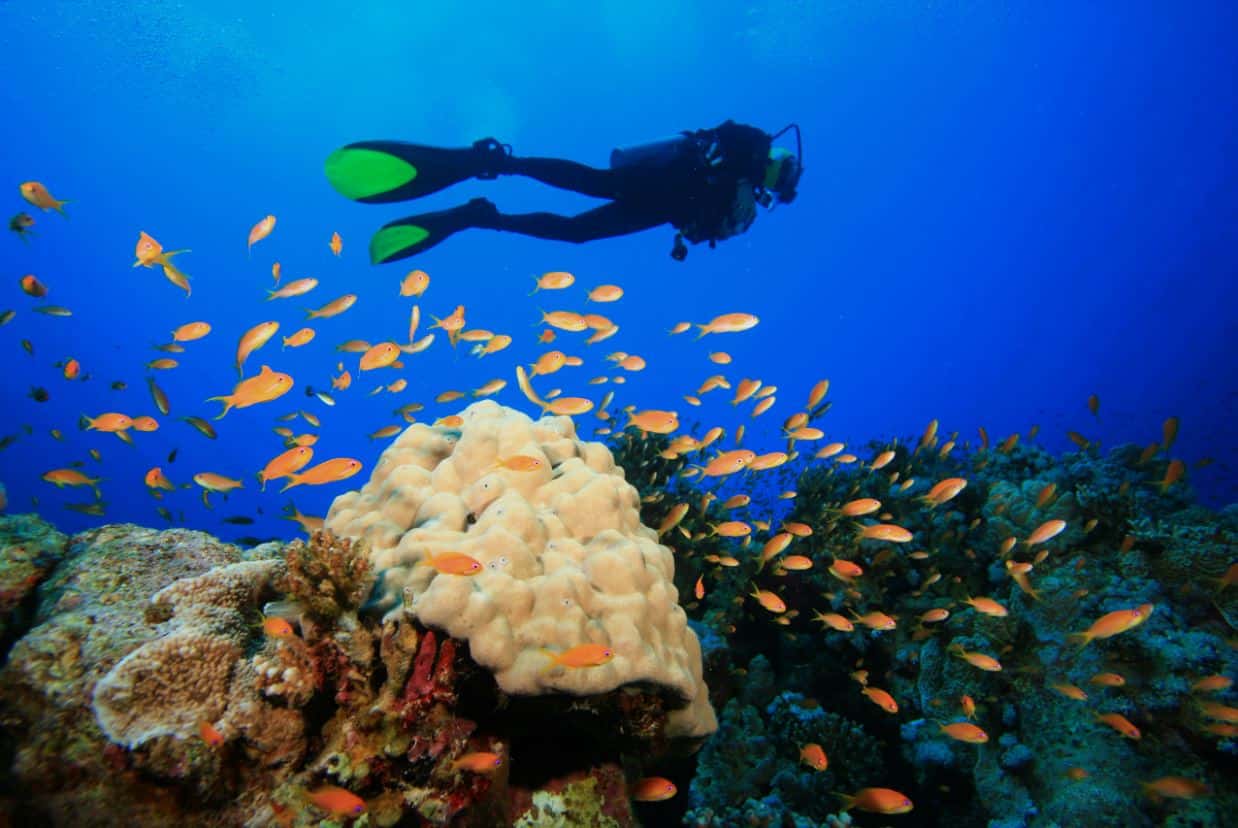
Welcome to paradise on earth! Here are the best spots for outdoor activities in Guadeloupe this winter.