Kayaking / Canoeing
Recommended
Kayak & Trek Tour of Congost de Mont-Rebei Gorge
(29)
Organized by Montsec Activa
Mont-rebei Gorge, Spain
6 hrs
From€50
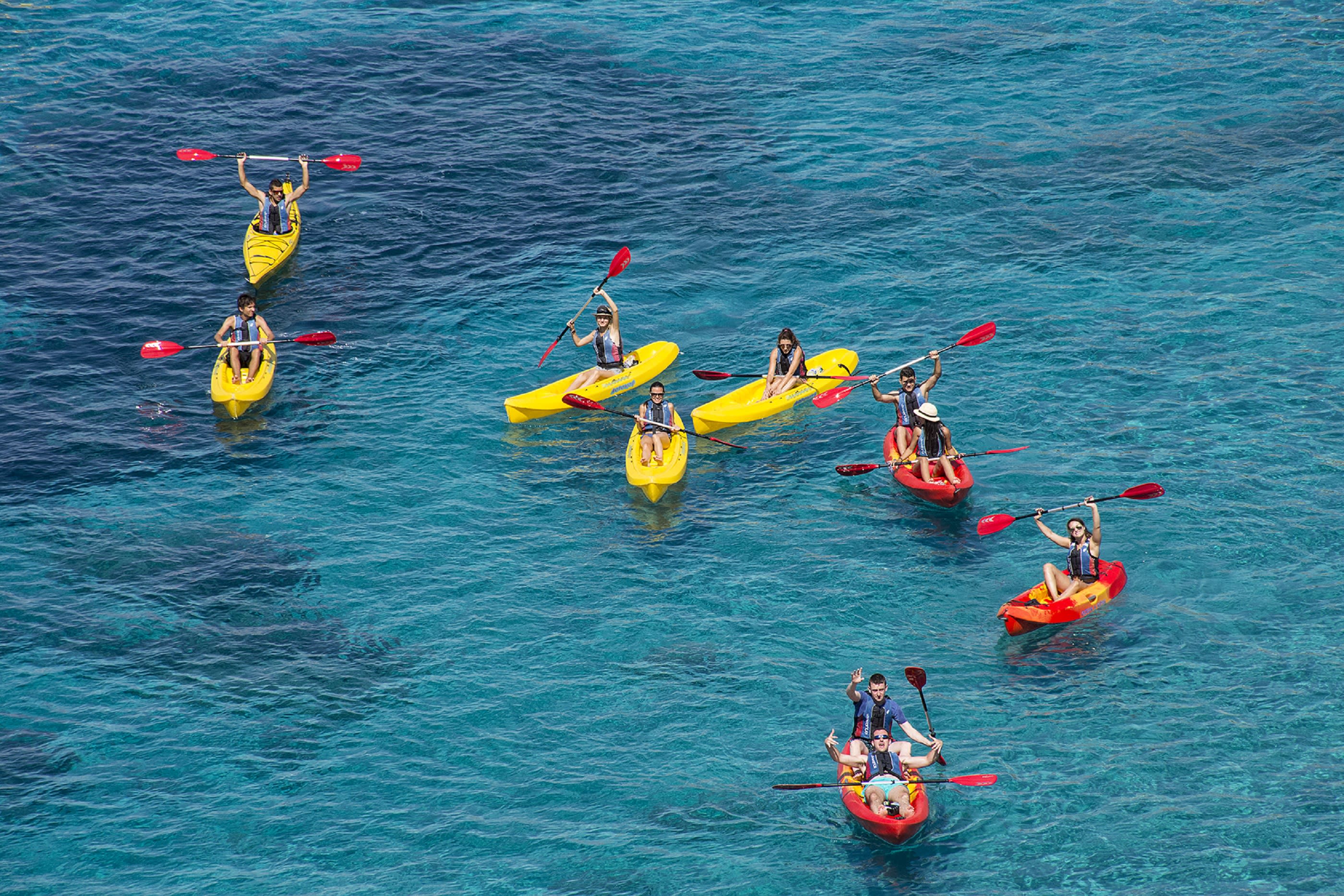
Kayaking offers distinct experiences in every season, with winter and summer each presenting their own conditions and highlights. Understanding these differences can help paddlers prepare and enjoy their time on the water.
Welcome to Manawa, the website for booking outdoor activities around the world. From diving to canyoning, we connect adventure enthusiasts with professional local instructors to guarantee unforgettable experiences.
Whether you’re planning a winter or summer kayaking adventure, each season comes with unique characteristics. Temperature, daylight hours and the behavior of the water can vary, influencing how you prepare, what you wear and what you experience on the outing. In this guide, we’ll explore key aspects like weather, equipment, water conditions, scenery and crowds, giving you a clear picture of what kayaking in both seasons is like.
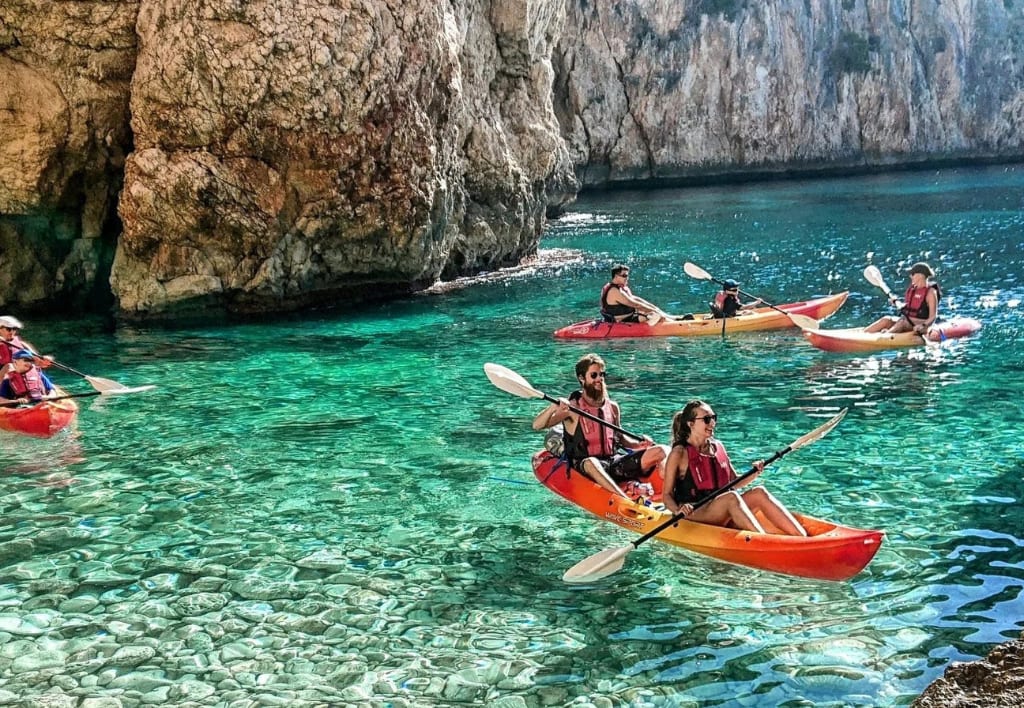
The weather can completely change your kayaking experience, and both winter and summer offer their own unique conditions. In summer, the air and water are generally warmer, which makes paddling for longer periods more comfortable and enjoyable. The longer daylight hours also give you extra time to explore rivers, bays and coastal areas at a relaxed pace. On the flip side, summer can bring sudden rain showers or thunderstorms, so it’s always wise to check the local forecast before heading out and be prepared for quick changes in the weather.
Winter kayaking feels different. The air is cooler, and the water temperatures are lower, which can make shorter paddles feel brisk at first but also refreshing once you get moving. Winds are often gentler, which usually means calmer water surfaces that make navigating easier, especially for beginners or families with kids. Days are shorter in winter, so timing your outing around daylight is important, but the season tends to have more consistent weather patterns, making it easier to plan your trip without surprises.
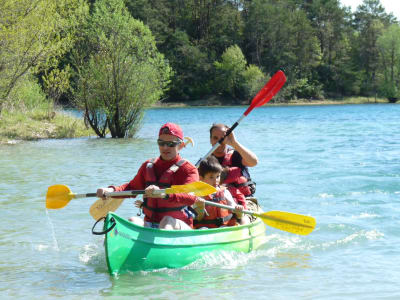
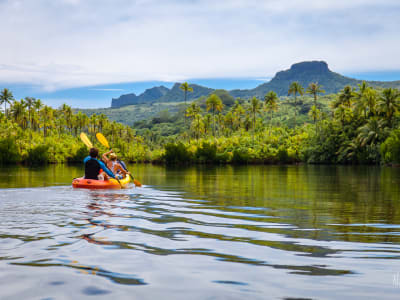
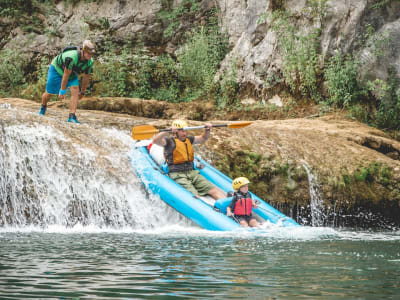
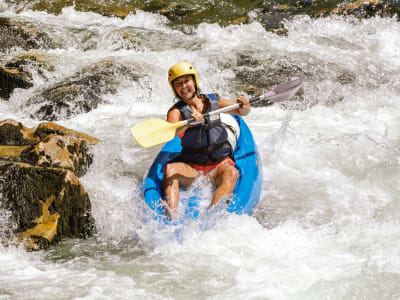
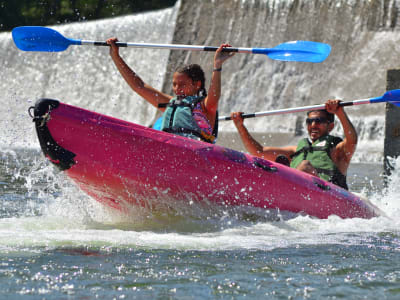
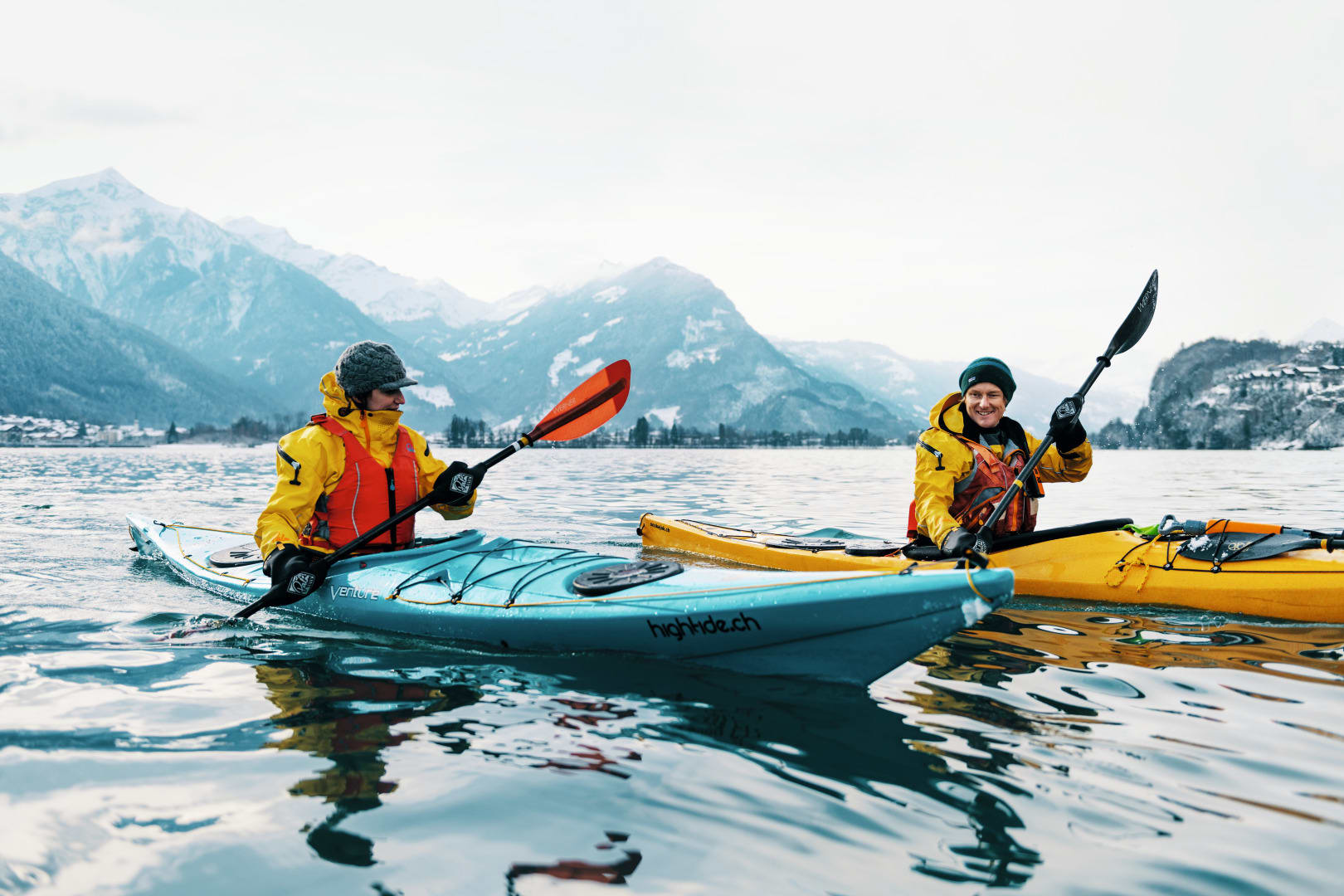
What you wear and bring on a kayaking trip can make a big difference and the right gear depends on the season. In summer, temperatures are usually warm enough that sometimes all you need is a bathing suit. Lightweight, quick-drying clothes, a hat and sunglasses can also be added for extra comfort and sun protection. Water shoes or sandals with straps are useful for rocky shorelines or shallow areas and don’t forget sunscreen to avoid sunburn during longer paddles. A dry bag can keep your belongings safe and your phone or camera protected while you enjoy the water.
Winter kayaking often calls for more layers, especially if the air and water are cooler. Many paddlers wear a wetsuit or a drysuit, along with a water-resistant jacket to block wind or spray of water, and gloves or a hat for extra warmth during early morning or late afternoon trips. Depending on the provider of the activity, some of these winter items may be included in the tour, which can make preparation easier and more convenient.
The water itself can feel very different depending on the season, and these variations can influence how you plan your kayaking trip. In summer, water temperatures are usually warm, making paddling for longer periods more comfortable and allowing for easy entry and exit from the kayak. The warmer water also makes stops along the way more enjoyable and in some areas, a quick swim can be refreshing. Summer waters can be busier, especially near popular beaches and coastal areas.
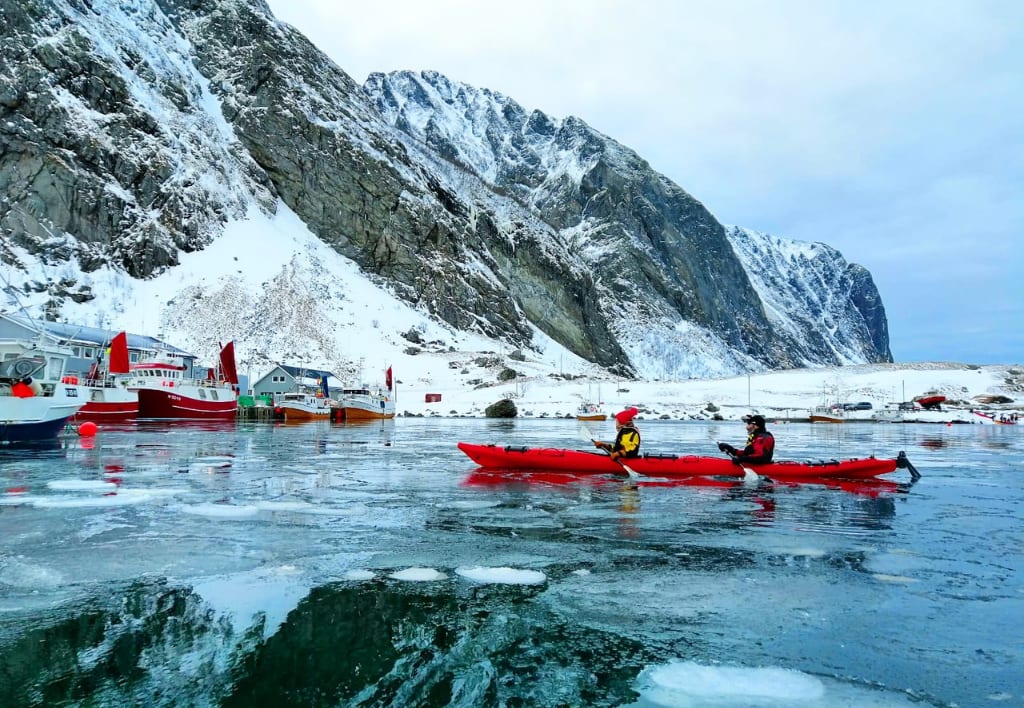
Winter water is much colder, sometimes so chilly that patches of ice appear, giving the rivers, lakes or coastal waters a sharp, crisp feel. The water can look darker and clearer, reflecting the cooler season and even a short splash can feel intense. Winds are often lighter in winter, so the surface is generally calm and smooth, making paddling easier, but the cold temperatures mean winter kayaking is focused entirely on the paddle itself rather than swimming or stopping in the water.
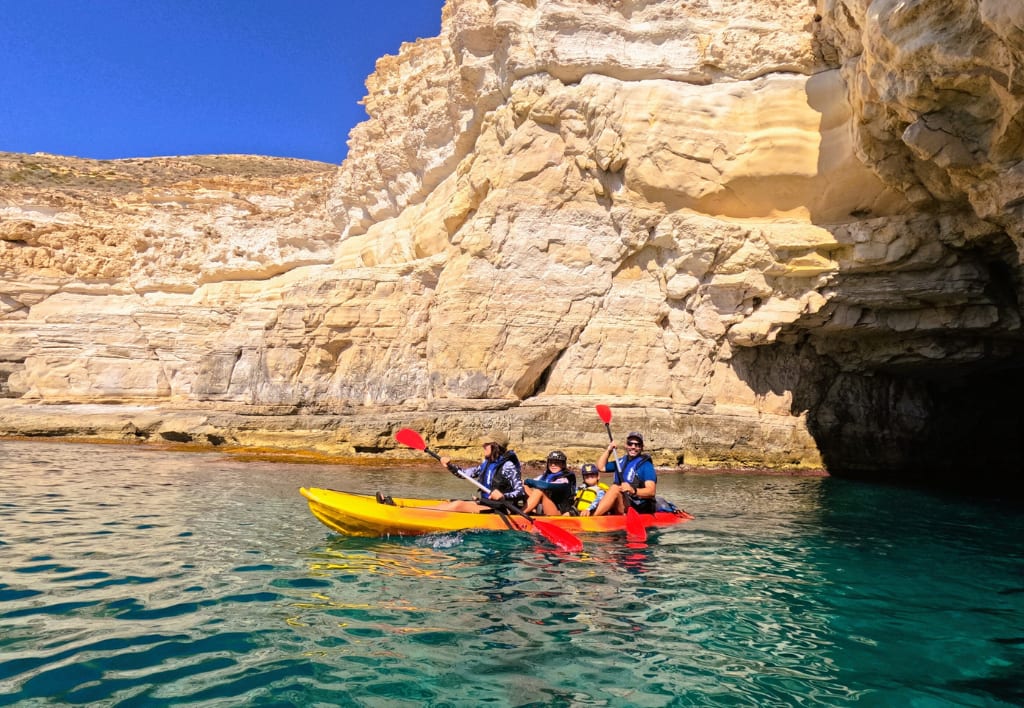
Even on guided kayaking trips, safety should be top of mind. In summer, sun exposure and dehydration are the main concerns, so wearing a life jacket, applying sunscreen and staying hydrated are essential. Paddlers should also pay attention to the instructor’s directions and remain seated properly to avoid tipping over.
Winter kayaking comes with its own set of safety considerations. The air is colder and the water can be shockingly chilly, so it’s important to stay focused and follow your guide carefully at all times. A sudden splash in winter isn’t a fun surprise like in summer, it can make you jump and remind you just how cold the water really is. Staying seated, paddling steadily and listening to instructions are key to enjoying the experience safely. Even though the environment is colder, keeping safety in mind ensures that winter paddling can be just as enjoyable as summer outings.
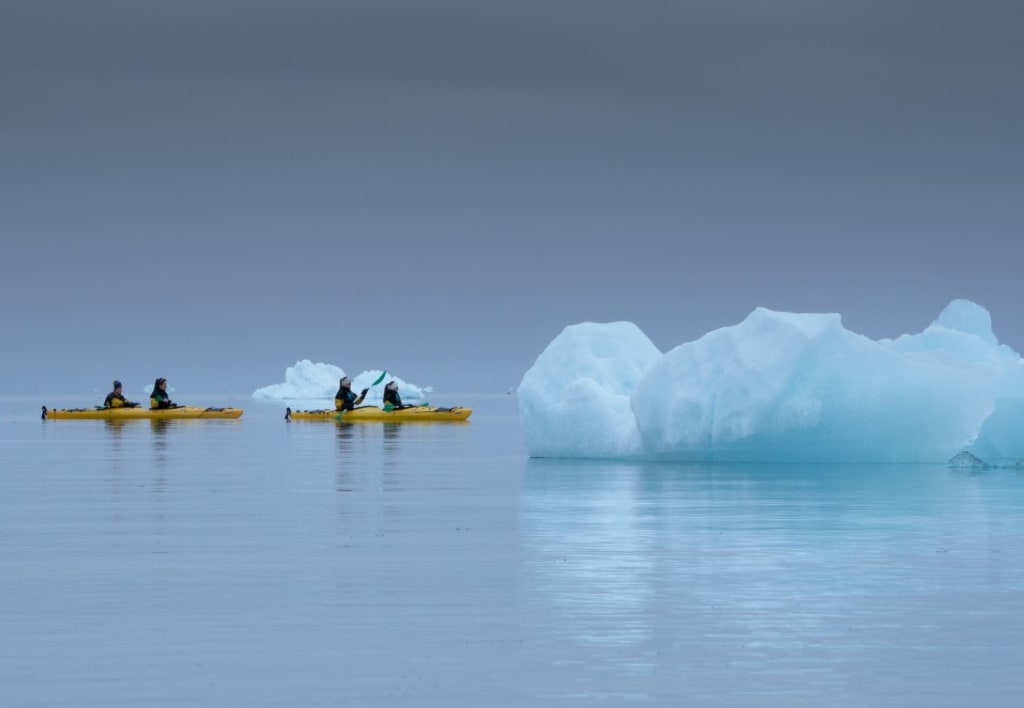
Kayaking offers a different kind of beauty in every season. In summer, the vibrant colors of the water, lush greenery along the shores and bright sunlight create a lively and energetic atmosphere. Wildlife is often more active and paddlers may spot birds, fish or even playful marine animals near the surface. Summer trips feel warm and inviting, making it easy to stop and enjoy the surroundings or take a short dip along the way.
Winter presents a contrasting but equally captivating experience. Cooler temperatures bring a crisp, peaceful atmosphere on the water and the landscape often looks clearer and sharper against the colder light. Calm waters make it easier to focus on the scenery and the lack of crowds adds a sense of tranquility. While you won’t be jumping in for a swim, the winter environment has its own charm, sometimes you may see small glaciers of ice floating in the water, creating a stunning and unique winter environment, making the outing feel a little like paddling through a quiet, natural winter wonderland.
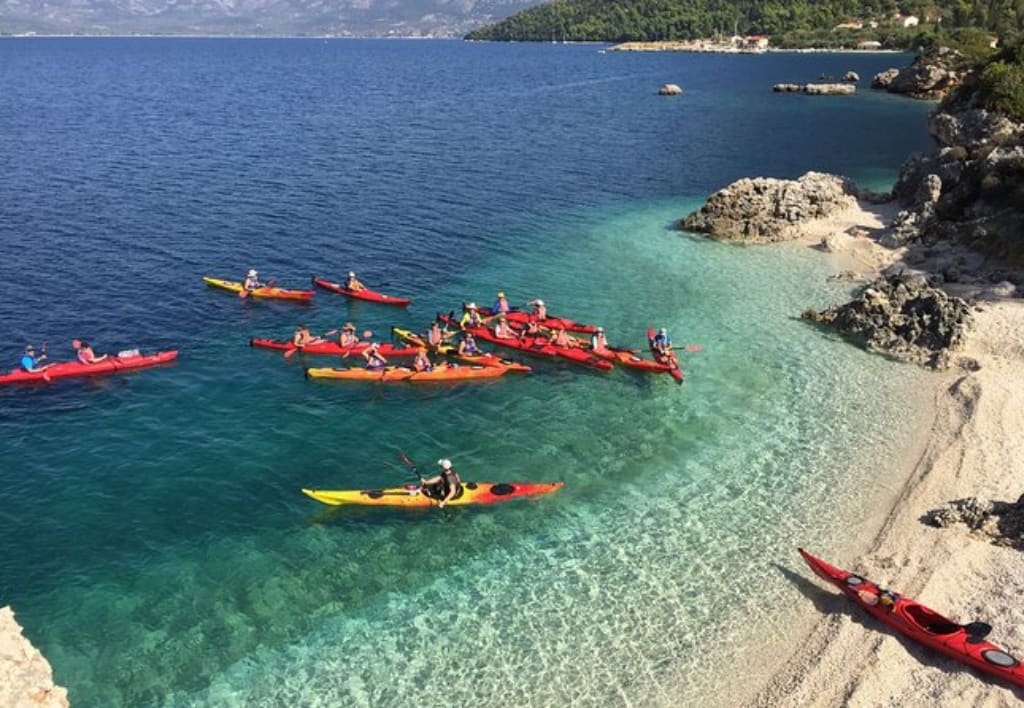
The season can have a big impact on how busy the waters feel. In summer, kayaking spots are often livelier, with more paddlers, swimmers and other water activities nearby. The energy of the season can make for a fun and social atmosphere, especially if you enjoy seeing others out on the water.
Winter, by contrast, tends to be much quieter. Cooler temperatures and shorter days mean fewer people, giving paddlers a sense of solitude and calm. Gliding through serene waters with just the sound of your paddle and nature around you can feel like a private escape. Even though the environment is colder, the peacefulness of winter kayaking offers a unique and memorable experience that’s very different from the busy summer vibe.
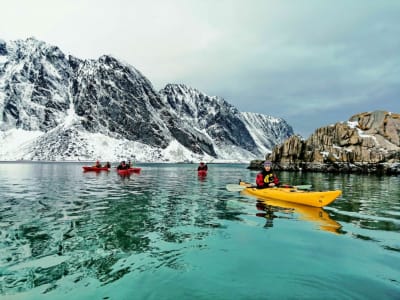
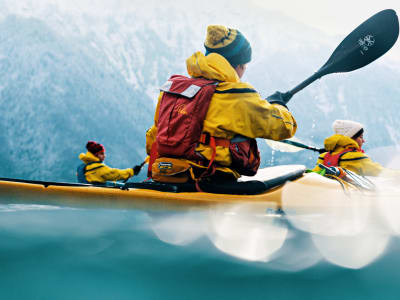
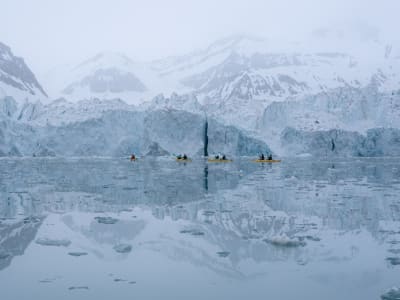
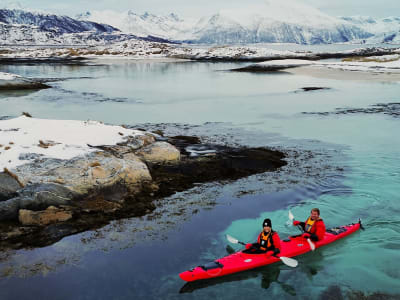
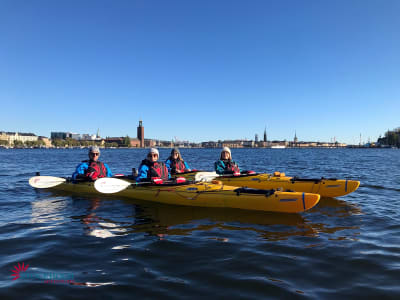
Both winter and summer kayaking offer unique experiences and the right season really depends on what you’re looking for. Summer provides warmer air and water, longer days and a lively atmosphere, which is great for those who enjoy sunshine, more active wildlife and a social vibe on the water. Winter, on the other hand, offers cooler temperatures, calmer waters and a quieter, more peaceful experience, perfect for paddlers who enjoy tranquility and dramatic winter scenery, sometimes even spotting floating ice or glacial patches.
Ultimately, neither season is “better” than the other. By understanding the differences in weather, water conditions, safety considerations and atmosphere, you can choose the timing that best fits your preferences and make the most of your kayaking adventure, whether it’s a sunny summer day or a crisp winter morning.
For more inspiration, check out our articles on The different types of sea kayaking or The best sea kayaking spots in the world to plan your next paddling journey.

Passionate about travel, I love discovering new places and exploring the world around me. Naturally curious, I always dive deep into researching my destinations to make the most of every experience. I’m especially drawn to outdoor activities and adventures and I’m always excited to share what I learn if it can help others along the way!
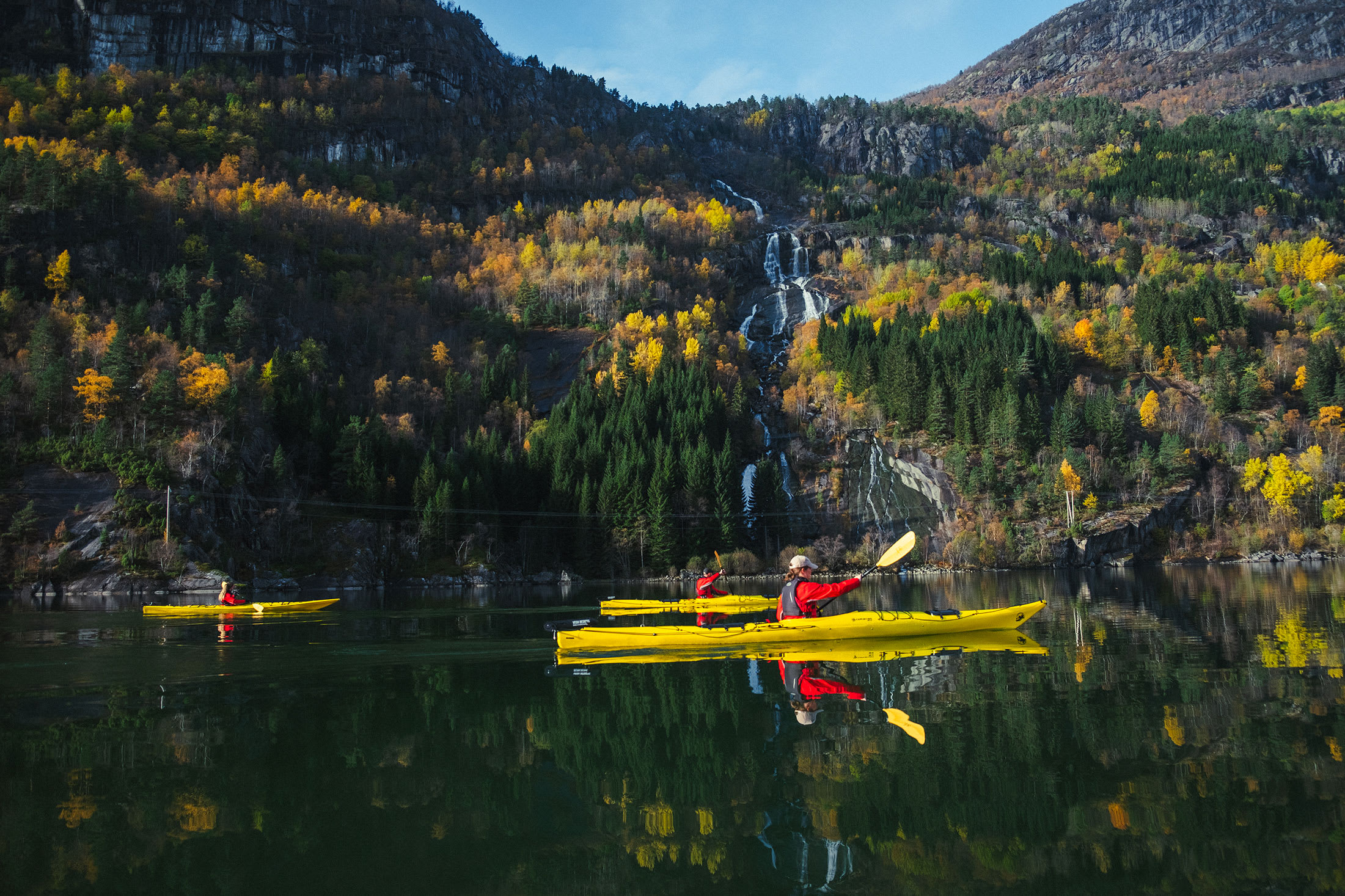
Looking for an outdoor escape to discover some superb natural sites? Discover the best sea kayaking spots in the world!
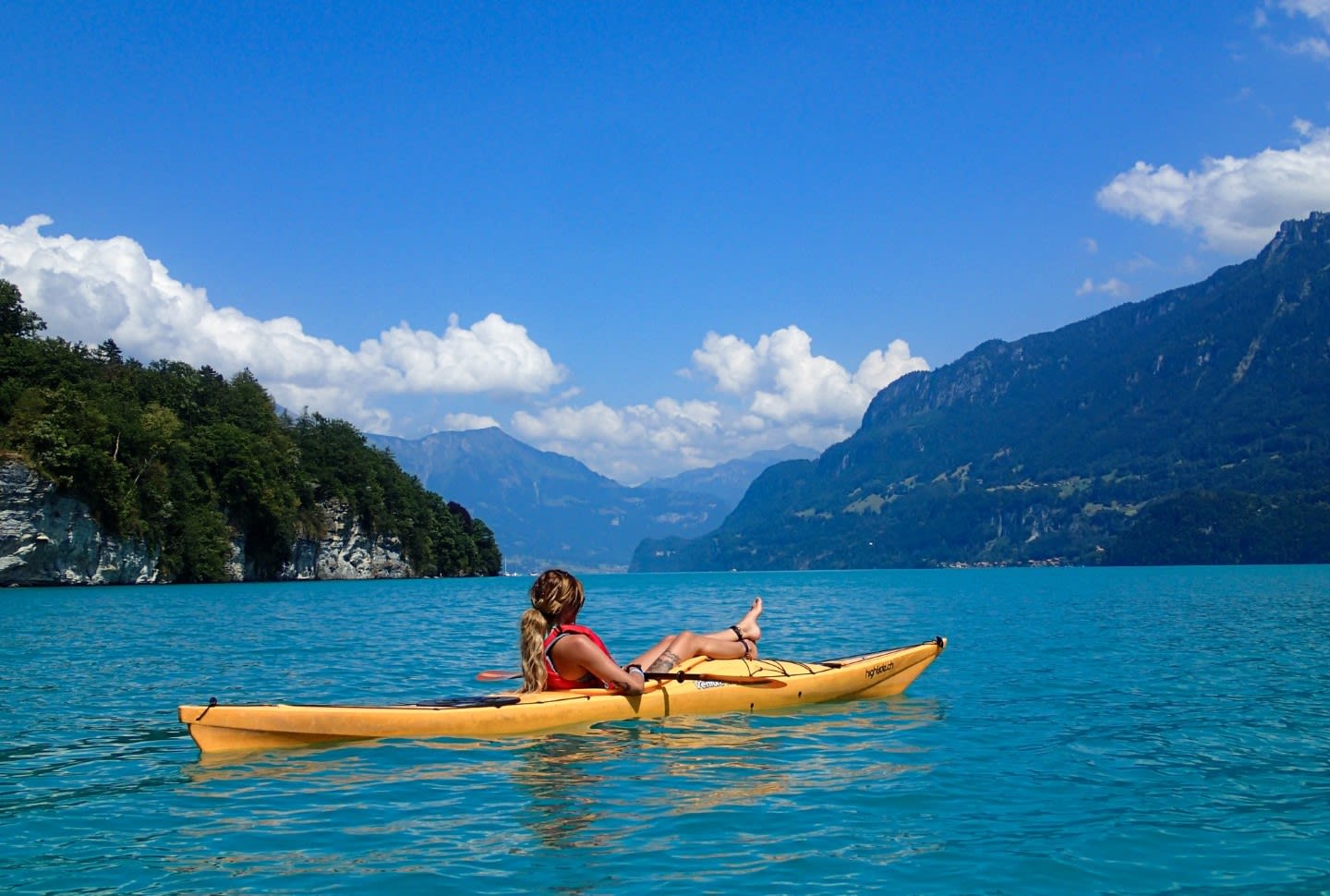
Did you think that sea kayaking was only practised at sea? Think again! Find out more about this water sport in this article.
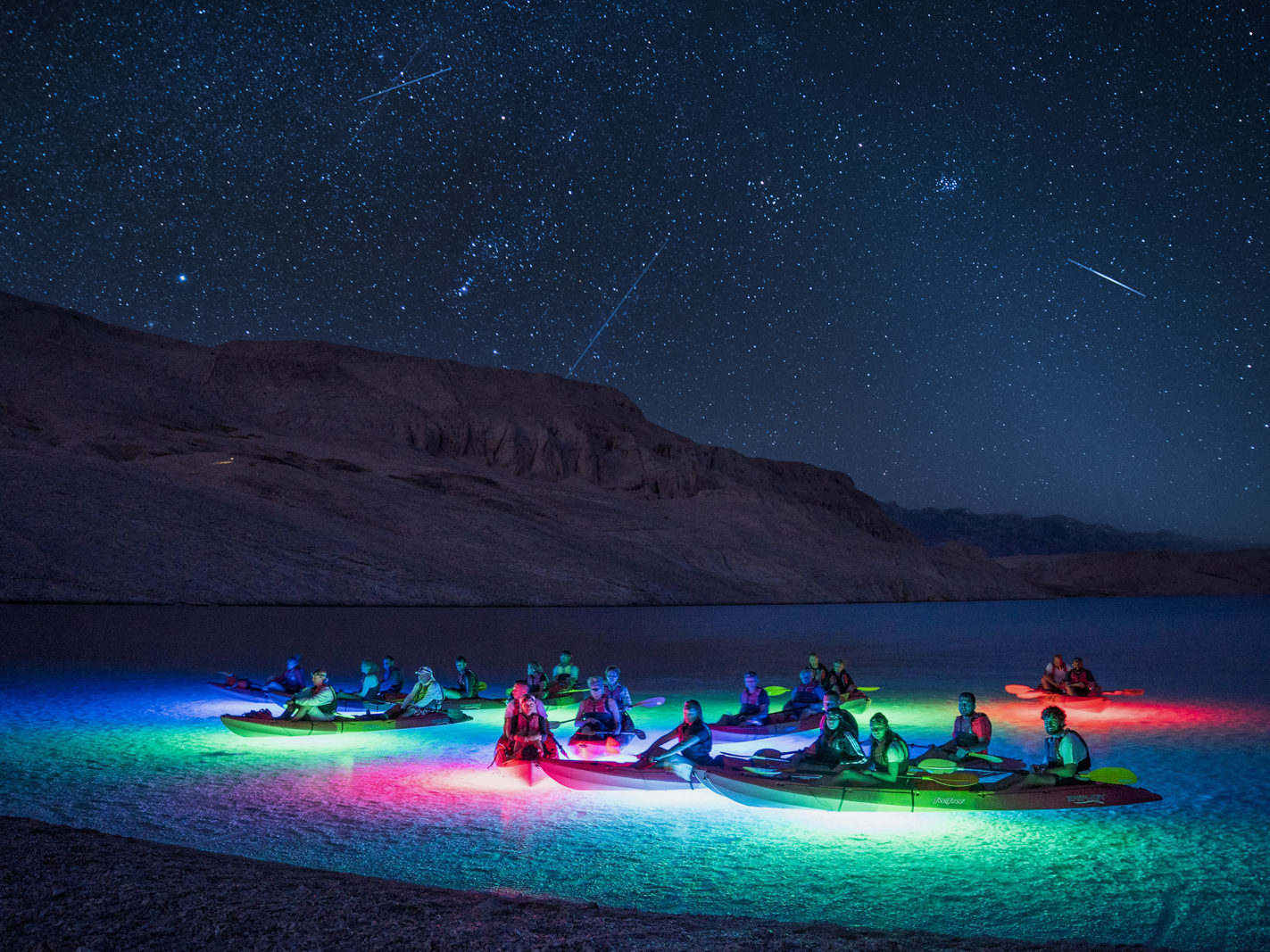
Discover the magic of noctourism! From night kayaking to Northern Lights chases, enjoy cooler temps and fewer crowds for an unforgettable nighttime adventure.
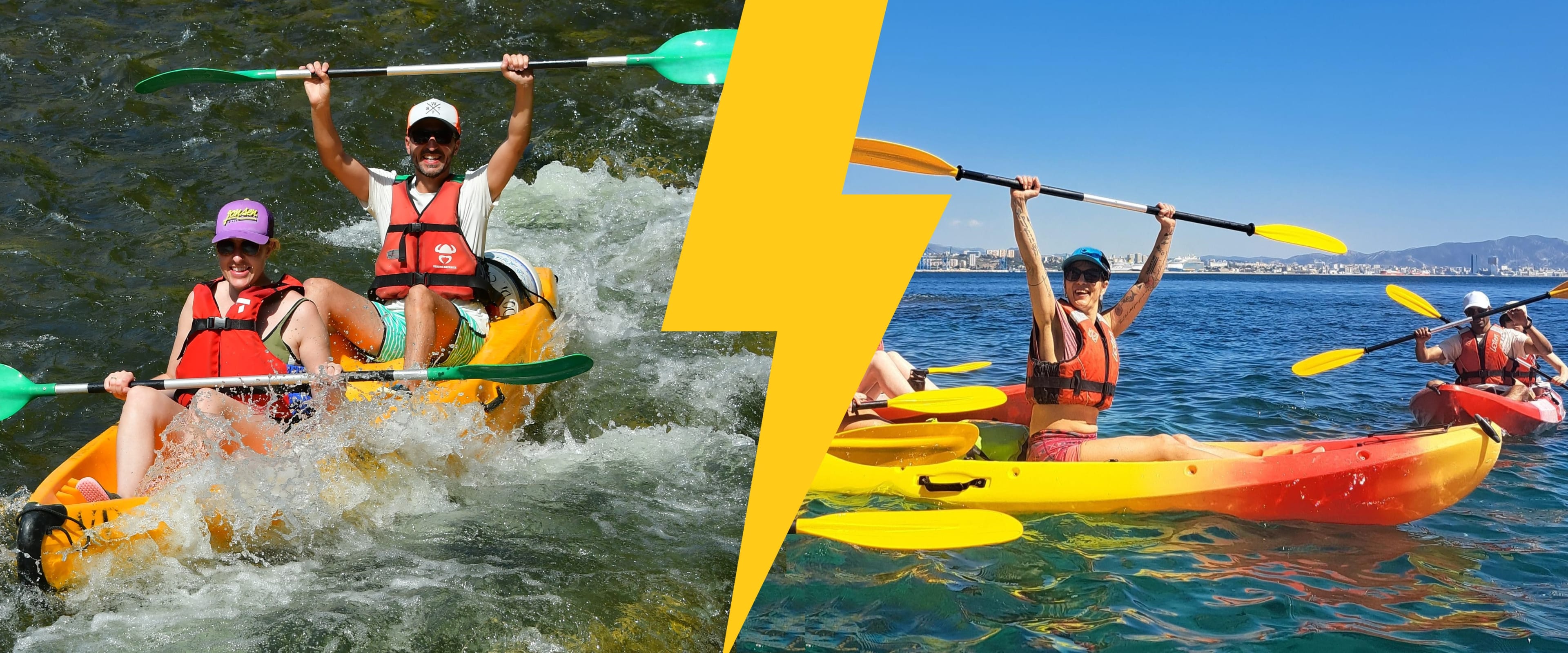
You've heard of kayaking, but do you know what the differences are between sea kayaking and river kayaking? Find out in this article!
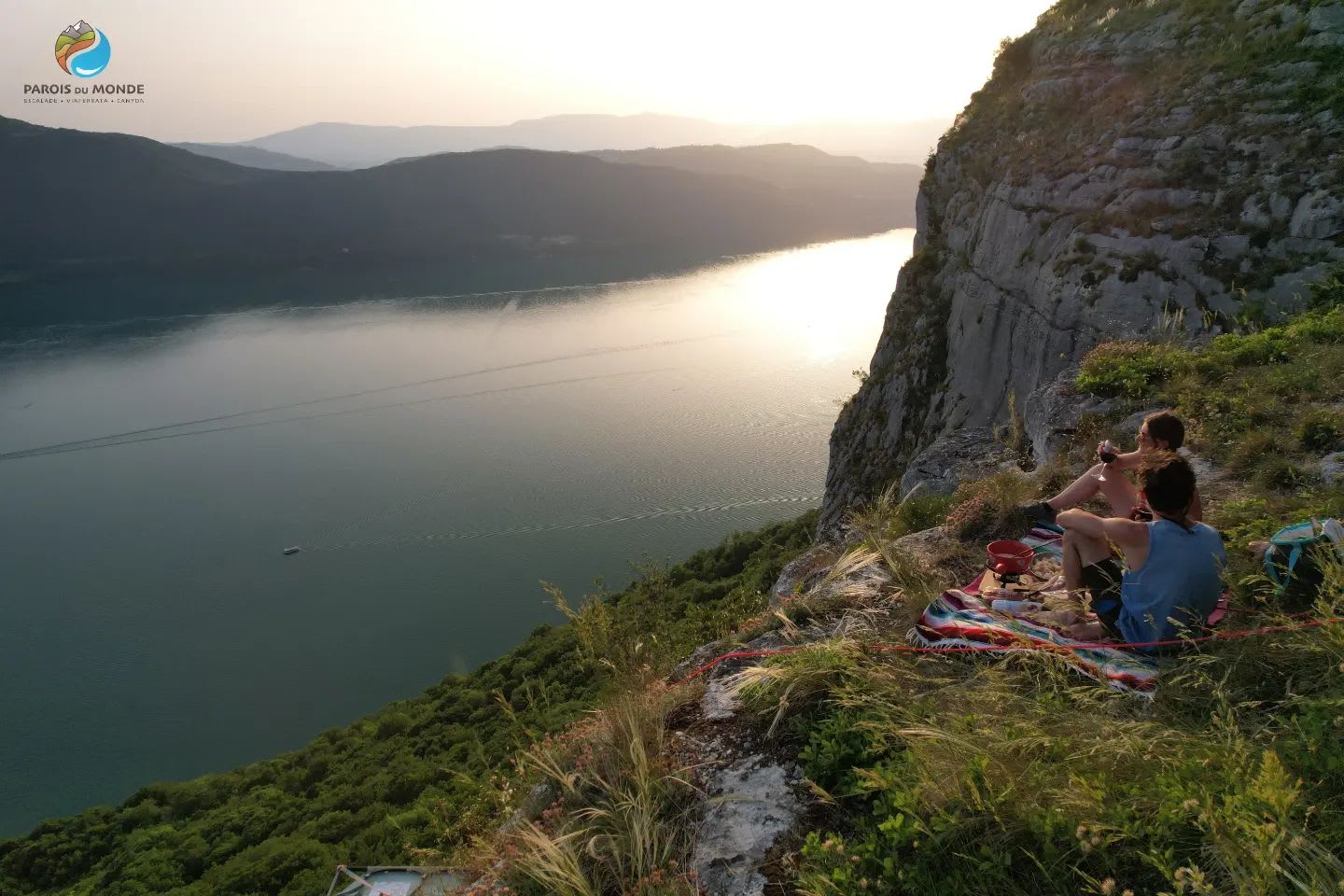
Discover the outdoor activities available at Lac du Bourget, choose the ones that suit you and head off for a great holiday in Savoie! Just 1h20 from Lyon, 1h from Grenoble and 40 m
For recent or 80/ 90's whitewater adventure flicks to brighten your day, and documentaries to inspire you to chase your dreams.